
Your cart is currently empty!
Category: Uncategorized
-

Straight and Delayed Blowback: Five PCC Operating Systems
The pistol caliber carbine, or PCC, has become a prevalent weapon’s platform as of late. Why not? Pistol ammo is cheaper, easy to find, and AR 15s have gotten boring for many of us. PCCs also come in a wide variety of designs, and today we are going to look at such PCC operating systems as the delayed blowback (radial and roller), straight blowback, and others. We’ll explain how they tick and maybe even how they tock.
Straight Blowback – The Basic PCC Setup
Straight blowback is the most simplistic operating system available for PCCs. Like most things PCC, straight blowback came out of the world of SMGs. Straight blowback systems work simply. The bolt rests against the chamber of the barrel and is not locked in place. You pull the trigger, the round ignites, and the force pushes the projectile forward and generates a rearward force that propels the bolt to the rear.
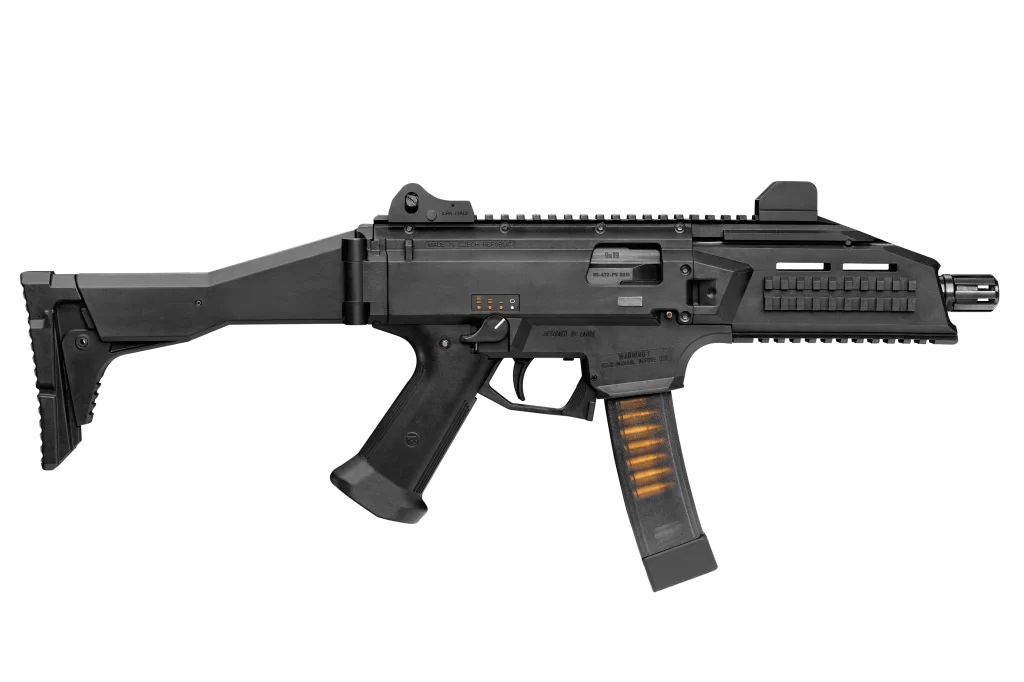
The CZ scorpion has a straight blowback system. The movement has to be slowed or delayed in some way. The delay must be long enough to ensure the bullet leaves the barrel before the case leaves the chamber. A straight blowback gun uses a massive bolt, a heavy spring, or some combination of the two to create this delay. Most PCC AR 15 kits are blowback designs.
Straight Blowback Examples—CZ Scorpion, KelTec Sub 2000, Hi-Point carbines
Pros
Simple and Cheap
Reliable
Cons
Heavy bolts can increase weight, and heavy springs can challenge ergonomics.
Heavier recoil
Radial Delayed Blowback
Radial delayed blowback is a system created by CMMG for their famed Banshee series. The Banshee series encompasses numerous PCC calibers and is useful for 10mm, 5.7×28, 9mm, and more. The system works by combining a proprietary bolt and chamber designed for AR 15 upper receivers.
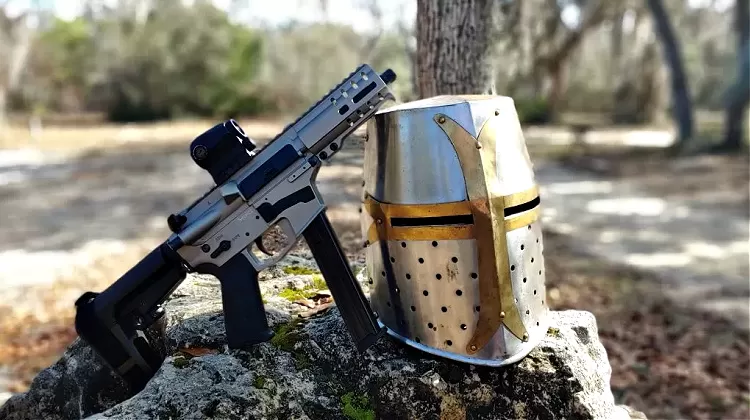
The Banshee Mk17 – Blowback action utilizes the recoil of a round fired to operate the bolt, but there must be a means to delay the recoil, via bolt mass, radial delay, roller delay, etc. The bolt looks and functions like a AR 15 bolt, except the lugs on the bolt, are cut to be angled, and this allows them to rotate and lock into the chamber. When the weapon is fired, the bolt has to rotate to unlock, and this creates the necessary delay to allow the bullet to leave the barrel before the case leaves the chamber. This system eliminates the need for a heavy bolt or spring and allows the gun to be nice and lightweight.
Radial Delayed Blowback Example – MK17 Banshee
Pros
Reliable
Eliminates heavy bolt and springs
Cons
Only available in AR platforms.
Roller Delayed Blowback
Roller-delayed blowback firearms are an old-school design but a very effective one. The most famous rolled delayed SMG or PCC is the MP5 series. Roller delayed firearms utilize rollers built into the bolt that locks into designated ports in the gun.

John McClane’s MP5 is an example of a roller delayed blowback firearm. Blowback firearms have an unlocked breech and recoil operated have a locked-breech design. When the weapon is fired, and pressure wants to send the bolt rearward, thive rollers prevent that. Roller delayed blowback creates a friction delay that keeps the bolt closed u When the weapon is fired, and pressure wants to send the bolt rearward, thive rollers prevent that. Roller delayed blowback creates a friction delay that keeps the bolt closed until the bullet has cleared the barrel. The roller delayed system works well with stamped guns.
Roller Delayed Blowback Examples – MP5, Garrow Arms Uppers
Pros
Eliminates heavy bolts and springs
Reliable
Works with stamped guns
Cons
Expensive and complicated design.
Dead Blow Action
Dead Blow Action is a modified variant of a standard blowback action designed by Ruger for the Ruger PCC series of rifles and pistols.
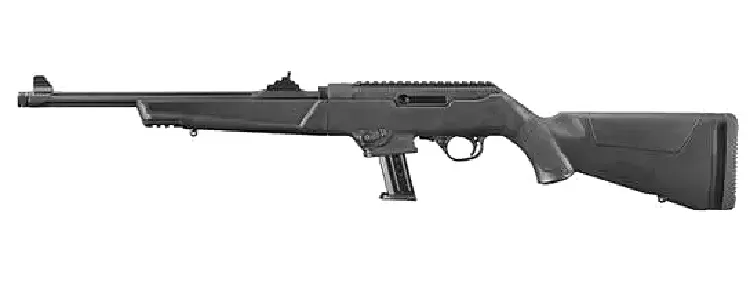
The Dead Blow Action utilizes nothing more than an added tungsten weight to the bolt. When combined with a blowback-operated system, it creates an effect similar to a dead blow hammer. The tungsten bolt can move forward and rearward, and as the bolt travels to the rear and slows, the tungsten weight slams forward, forcing the bolt to travel forwards. The end effect is the bolt travels less than a standard blowback action.
Dead Blow Action Examples – Ruger PCC and PC Charger series
Pros
Inexpensive
Generates less recoil
Cons
It still requires a heavy bolt.
Short Stroke Gas System
Short stroke gas systems are popular on modern rifles in rifle calibers. PCC rifles and pistols using short-stroke gas systems are very rare. Short stroke gas systems utilize a piston system that is attached to the barrel and a gas block. As a round is fired, gas is generated from the cartridge fired, and some are siphoned off through the gas block.
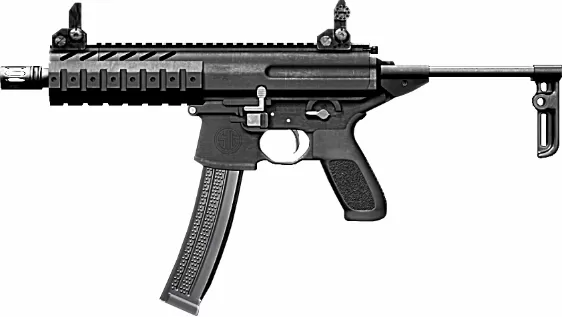
Sig Sauer MPX This gas propels a piston that is driven rearwards and strikes the bolt. The bolt is sent rearward and continuing the cycle of operations.
Short Stroke Gas System Examples – SIG MPX
Pros
Lightweight
Reliable
Proven
Cons
Expensive for PCCs
The PCC World
The World of PCCs and submachine guns are rather large and full of all sorts of different fun guns. While almost all use some form of blowback action, the difference in how they handle is significant. The price difference is also no laughing matter. These are fascinating firearms and the different way engineers have recreated the mousetrap could fill a book. Or well, at least an article on it.
-

How Striker-Fired Guns Work
Striker-fired guns are the bee’s knees. Rarely do you see a new gun come out in any design besides striker-fired. Hammer fired handguns aren’t dead, but they may be gone as far as armed professionals go. The United States military got rid of the hammer-fired Beretta for the P320. Most police forces have transitioned to these guns in various flavors, and most popular carry guns are striker-fired models. What exactly is a striker-fired handgun? How do they work? Well, let’s find out.
What’s A Striker-Fired gun?
All strikers are firing pins, but not all firing pins are strikers. Striker fired guns can best be described as spring-loaded firing pins. The racking the slide or pulling the trigger, or a combination of both cock the striker and the striker is held in the ready to fire position with potential spring energy behind it. Once the trigger is pulled, the spring energy propels the striker forward.

Strikers galore. The striker then hits the primer, which ignites the gun powder, and so on and so forth. Striker fired guns are not all the same, though. They work under different systems, and the only thing they all have in common is that they lack a hammer.
The alternative in semi-auto pistols is a hammer-fired design. Hammer fired models are still prevalent, but less so for duty use, and even fewer are subcompact.
DAO, SAO, Partially Cocked, DA/SA?
What are most striker designs classified as? Are they DAO? SAO? Well, it’s not that simple. They could be both or neither. Most are partially cocked strikers. Glock uses partially cocked with their Glock slide. Glock popularized the partially cocked system in which technically it’s a double-action design, but also not really.
In these systems, the striker is partially cocked, and the trigger fully cocks the striker and releases it. This is technically two actions but does not fully cock the firearm as a tradition DAO would. This is the most popular striker-fired system.

There are DAO striker guns, well there is at least two, and that is the P99c DAO and the CZ 100. I’m sure there are more, but they are a small subset of guns.
There are also SA/DA striker guns, which include the standard P99. These work just like a traditional hammer-fired DA/SA with the first shot being rather long and subsequent shots have a lighter, shorter trigger pull. Besides the P99, the MR9 and individual members of the Canik series are DA/SA, but there are also just P99 clones more or less.

The left side of the PPQ SF. The left side of the PPQ SF.
There are also true single action striker guns. The Walther PPQ, for example, is an actual single action striker-fired design. These guns are like their hammer-fired brethren and have an excellent trigger.
You even get weird designs like the HK P7 in which you squeeze the grip to manually cock the gun into the single-action mode. Striker-fired pistols are likely more varied than hammer-fired guns.
Why a Striker?
One of the most significant advantages of a striker-fired design is a consistent trigger pull. There are very few DA/SA striker-fired guns and even fewer DAO guns. Most striker-fired guns give you one constant trigger pull that’s often light and short, with a positive reset.

Still love my hammer-fired guns. Another benefit is without a hammer, you are less likely to snag on the draw, especially from concealment. Striker-fired guns are also much more straightforward than hammer-fired guns. Putting a Glock together versus a CZ makes that readily apparent. A more straightforward gun means it’s more likely you can make upgrades or repairs at home. As someone who’s swapped both a Glock and CZ trigger, I can say the Glock takes about a quarter of the time.

….But even CZ is making striker-fired guns. The only real downside is the lack of DA/SA or DAO guns if you prefer that trigger system. A hammer does allow you to restrike a round if it fails to ignite, but with high-quality ammo, that isn’t that big of an advantage. Striker guns are the future for now, and I doubt we’ll see a big move back to hammer-fired guns. Might as well learn to love them, and this is coming from a hammer-fired fella.
Like semi-auto hotties?
Check out Ser Longpyke’s article on the VR80.

-

Molon Labe
Molon Labe: the phrase dates back many centuries, but it’s been used more in any month (or week, or day) here in the United States than in all the years since the phrase was coined. Most simply put, Molon Labe means either “Come and take them,” or “Come and take it” depending on how the original Greek is interpreted.
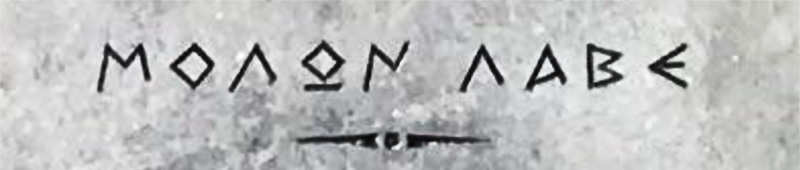
Molon Labe is an ancient Greek phrase that means “Come and take them” or “Come and take it”; it dates back to Ancient Greece but has been used historically several times since as an expression of defiance. It has come to be one of the most oft-repeated by Second Amendment advocates. Most of you reading this probably recall the following scene (you’ll need to scroll about 30 seconds in):
Just a fewer will recognize this one.
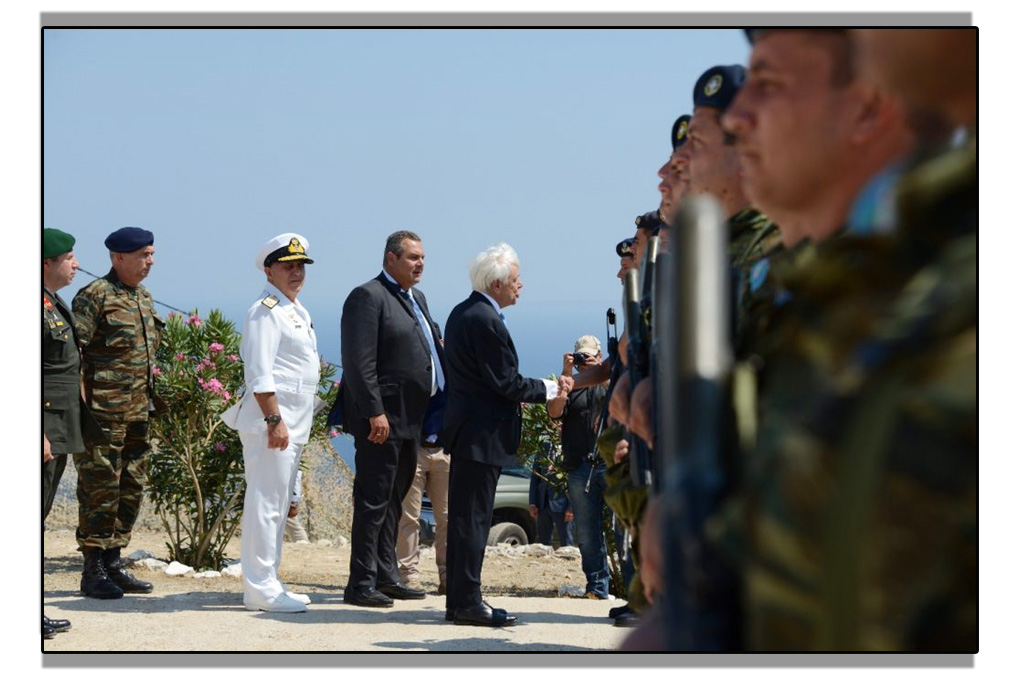
Their term “Molon Labe” has been been used in its original application more than once since its legendary first utterance. Here His Excellence the President of the Hellenic Republic Mr. Prokopis Pavlopoulos, the Minister of National Defence Mr. Panos Kammenos and HNDGS Chief Admiral Evangelos Apostolakis inspect Greek troops. In 2017, President Pavlopoulos used the phrase Molon Labe at a military honors ceremony to send a message to Greece’s longtime on-again-off-again adversary Turkey. Molon Labe Pronunciation
“How is Molon Labe pronounced,” you ask? Glad you asked.
The correct pronunciation of Molon Labe is, at least according to everything we’ve seen in our research, mow–LAWN law-BAY. You put the stress on the second syllable of both words. If you believe some of the self-proclaimed purists, the proper Greek way would have it pronounced mow-LAWN law-VAY.
Are either of those correct? Probably both. Maybe neither, at least not completely. See, we’re not Greek linguists. But we’ve been given to understand that the ancient pronunciation of β was the same as the english b, while the v/w sound came from ϝ/. The latter, διγαμμον, is apparently a letter that eventually disappeared
That seems reasonable. Alphabets change, or never matched up to modern English in the first place. For instance, there weren’t any “U” letters in ancient Latin, they were all actually “Vs”. Anybody who watched the ending of Indiana Jones and the Last Crusade can tell you that. But we digress.
Molon Labe Pronunciation (Video Explanation)
See also:
https://slate.com/news-and-politics/2021/09/sparta-history-molon-labe-origin-second-amendment.html
Molon labe 3/16/8.9k
Molon Labe meaning 4/4.4k/450
Molon Labe pronunciation 2/700/600
Molon Labe shirt 0/450/40
Molon labe t shirt 0/50/200
Molon Labe Tattoo 0/1.5k/400
-
The Effective Range of 6.5 Creedmoor
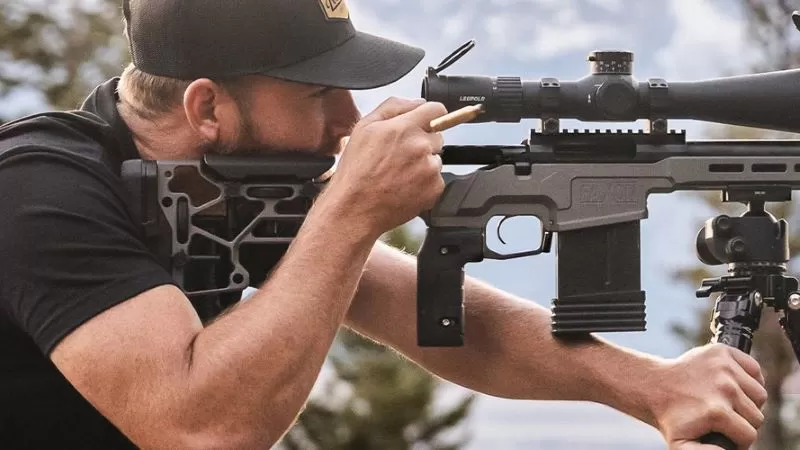
Ballistics and effective range can be a tricky subject to get into, especially when you’re working with a caliber that isn’t as common as some. Luckily Faxon has covered and provided this nifty ballistic breakdown. Let’s dive into the effective range of 6.5 Creedmoor.
via the Faxon Firearms blog (which you should be reading if you’re not already).
6.5 Creedmoor Effective Range
The maximum effective range of the 6.5 Creedmoor is roughly 1,200 yards, depending on ammunition, rifle platform, and the shooter’s ability to make precision hits at a distance. If you’re hunting with the 6.5 Creedmoor, the maximum effective range for an ethical kill is roughly 500 yards.

Shooting to determine the maximum effective range. This is a great cartridge. What is maximum effective range?
The effective range represents the furthest distance at which a firearm can accurately and reliably hit a target, maintaining sufficient kinetic energy for its intended purpose. For the 6.5 Creedmoor, achieving an effective range involves more than mere distance; it requires precision, power, and the ability to meet specific objectives, whether in hunting or competitive shooting.
Factors Influencing Effective Range
Barrel Length’s Impact: The length of the barrel directly influences the bullet’s velocity and stability. Longer barrels allow for a more complete burn of propellant, increasing the bullet’s velocity and potentially its range. However, shooters must balance these benefits against factors like maneuverability and overall rifle weight.
Kinetic Energy Considerations: Kinetic energy, crucial for determining the effective range, especially in hunting, depends on the bullet’s mass and velocity. The energy delivered at the target must be sufficient to achieve the desired outcome, making understanding and maximizing kinetic energy essential for extending the effective range.
External Ballistics and Its Effects: After a bullet exits the barrel, external factors such as wind, air pressure, and temperature influence its trajectory. Understanding how these elements affect the bullet’s path is vital for accurately estimating and adjusting for effective range.
Bullet Design and Its Influence: The 6.5 Creedmoor’s bullet design, particularly its ballistics coefficient, plays a significant role in its ability to maintain velocity over distance. Bullets with higher ballistics coefficients are more aerodynamically efficient, reducing air resistance and extending the effective range.

The Role of Kinetic Energy in Effective Range
Kinetic energy, fundamentally, is the energy a bullet carries as it moves towards its target. This energy is crucial in determining the effective range of the 6.5 Creedmoor, as it directly impacts the bullet’s ability to perform its intended task upon impact.
The formula for kinetic energy, ½ mv-squared, where m is the mass of the bullet and v is its velocity, highlights the significant role velocity plays in kinetic energy and, consequently, in effective range.
Kinetic Energy’s Impact on Terminal Performance
The terminal performance of a bullet—its effect on the target upon impact—is largely a function of its kinetic energy.
High kinetic energy at the point of impact ensures that the bullet has sufficient force to penetrate and cause the desired level of damage, whether for hunting or ballistic performance.
In hunting scenarios, for instance, a bullet must deliver enough kinetic energy to ensure a humane, ethical kill.
Kinetic Energy Across Distances
As a bullet travels, it loses velocity due to air resistance and decreases kinetic energy.
The rate of this energy loss determines the effective range of the 6.5 Creedmoor. Bullets designed for long-range shooting, such as those commonly used in 6.5 Creedmoor cartridges, are engineered to retain as much kinetic energy as possible over longer distances.
This retention capability extends the cartridge’s effective range, making it a preferred choice for long-range shooting disciplines.

The Faxon Sentinel AR10 is available in 6.5 Creedmoor, .308 Winchester, and 8.6BLK. The Significance of Bullet Design in Kinetic Energy Retention
Bullet design plays a pivotal role in kinetic energy retention.
Factors such as the bullet’s shape, mass, and ballistic coefficient influence how efficiently it can maintain its velocity and, by extension, its kinetic energy over distance. Bullets with higher ballistic coefficients experience less drag and can therefore retain more kinetic energy at longer ranges.
Shooters aiming to maximize the effective range of their 6.5 Creedmoor must consider ammunition selection carefully. Choosing bullets with optimal designs for kinetic energy retention is crucial.
Additionally, understanding the ballistic properties of different loads can help shooters make informed decisions that enhance their rifle’s performance across varying distances.

The Impact of Rifle Configuration on Effective Range
Rifle configuration plays a pivotal role in maximizing the effective range of the 6.5 Creedmoor. From the precision of the bolt action mechanism to the length and make of the barrel, each aspect of a rifle’s design directly impacts its accuracy, stability, and overall performance at long distances.

Bolt Action Rifles: Precision and Reliability
Bolt action rifles, known for their precision and reliability, are particularly well-suited for the 6.5 Creedmoor cartridge. The mechanism of a bolt action rifle ensures a tight lockup of the cartridge in the chamber, leading to consistent bullet velocity and trajectory. This consistency is crucial for long-range shooting, where even minor variations can significantly affect accuracy.
Barrel Considerations for Optimal Performance
The barrel is another critical factor in rifle configuration. Its length, twist rate, and material affect the bullet’s velocity and stability. A longer barrel generally allows for more complete powder burn, which can increase bullet velocity and, consequently, kinetic energy at the target.
- Barrel Length: The optimal barrel length for a 6.5 Creedmoor varies depending on the specific application but generally ranges from 20 to 26 inches for a balance of velocity and manageability.
- Twist Rate: The barrel’s twist rate must match the bullet’s weight and design to stabilize the bullet in flight. A 1:8 twist rate is commonly recommended for the 6.5 Creedmoor, accommodating a wide range of bullet weights with excellent stability.
An example: highlighting the Faxon FX7 Bolt Action Rifle
Among the top contenders for the best 6.5 Creedmoor rifles, especially for competition shooters, stands the Faxon FX7.
This bolt-action rifle exemplifies precision engineering, offering shooters an unparalleled combination of accuracy, reliability, and performance. The Faxon FX7 is designed with a heavy, fluted barrel that not only aids in heat dissipation but also contributes to its exceptional accuracy over long distances.
Its ergonomic design and customizable features make it a preferred choice for shooters looking to achieve top-tier performance in competitive settings.
To fully harness the capabilities of the 6.5 Creedmoor, shooters must consider their rifle’s configuration carefully. The Faxon FX7 bolt action rifle serves as an exemplary model of what to look for in a competition-grade firearm.
Its superior design and construction cater to the demanding needs of precision shooters, making it a standout choice for those aiming to push the limits of their 6.5 Creedmoor’s effective range.
Real-World Applications and Limitations
Leveraging the 6.5 Creedmoor in Hunting
The 6.5 Creedmoor has revolutionized the hunting world with its exceptional accuracy, flat trajectory, and manageable recoil.
Its versatility across a range of game sizes makes it a preferred choice for hunters seeking a cartridge that combines long-range precision with effective terminal performance. Whether targeting deer, elk, or smaller game, the 6.5 Creedmoor delivers the necessary kinetic energy and accuracy at distances beyond what traditional hunting calibers can achieve.
However, hunters must understand the ethical considerations of ensuring a humane kill, which requires precise shot placement and understanding the cartridge’s limitations based on the game size and distance.
The 6.5 Creedmoor in Competitive Shooting
In the realm of competitive shooting, the 6.5 Creedmoor stands out for its exceptional ballistic coefficients and reduced wind drift.
Its accuracy at long ranges makes it a dominant force in precision rifle competitions. Shooters appreciate the cartridge’s ability to maintain tight groupings at distances exceeding 1,000 yards, a testament to its design and performance.
The 6.5 Creedmoor’s efficiency in recoil management also allows shooters to maintain sight picture and make quicker follow-up shots, a critical advantage in competition settings.

Faxon Sentinel AR10 in 6.5 Creedmoor, with a 20″ barrel. Limitations and Considerations
While the 6.5 Creedmoor excels in many aspects, understanding its limitations is crucial for effective application.
One consideration is the choice of bullet weight and design, which must be matched to the specific task, whether hunting or target shooting, to optimize performance.
- Ammunition Availability and Cost: The popularity of the 6.5 Creedmoor has led to a wide variety of ammunition options, though costs can vary. Shooters should consider the availability and expense of high-quality ammunition, especially for specialized applications.
- Barrel Life: The high-velocity rounds of the 6.5 Creedmoor can lead to faster barrel wear compared to some other calibers. Regular maintenance and monitoring of barrel conditions are essential for maintaining accuracy over time.
Connect with Faxon Firearms on X, YouTube, and the ‘gramz.
6.5 Creedmoor Additional Reading
Looking to learn more? Check out these links.
- 6.5CM according to the Journal of Mountain Hunting
- 6.5 Creed max distance discussed on Snipers Hide
- All about the 6.5 Creedmoor cartridge on Wikipedia
BAD MOON BLOG – 6.5 CM Effective Range
-

Red Dawn Code Words (and WOLVERINES!)
The chair is against the wall… The chair is against the door… John has a long mustache… Wound my heart with monotonous languor… These are phrases taken from scenes in a couple of movies, one actually a sort of homage to the other. Most of you reading this have heard all the Wolverine Red Dawn quotes, but there’s more to it.

It’s 11:59 on Radio Free America; this is Uncle Sam, with music and the truth until dawn. Right now, I’ve got a few words for some of our brothers and sisters in the occupied zone. The chair is against the wall. The chair is against the wall. John has a long mustache. John has a long mustache. It’s twelve o’clock, American, another day closer to victory. And for all of you out there, on or behind the line, this is your song.”
It’s similar to “Radio London” (Radio Londres), which broadcast through most of WWII from England into Nazi-occupied France. Operated by the Free French in conjunction with the BBC, it served to counter Axis propaganda and also to pass along coded instructions to members of the Resistance, the OSS, and others involved in fighting against the occupation.
These morale patches, which originally engendered this article back in 2012, are from Orca Industries and are available on Amazon.

The now-iconic Red Dawn WOLVERINES patch. 

Col. Andrew Turner: May He Rest In Peace! Honor his memory with a morale patch. This article was originally published in November of 2012.
Red Dawn Wolverines
The chair is against the wall.
Red Dawn taught us about John’s mustache and where the chair is leaning, but have you heard this one?
Molasses tomorrow will bring forth cognac.
It’s from this scene from The Longest Day. You see, the Red Dawn Wolverines weren’t the first to use such code words.
John has a long mustache.
There are other versions of this genre of morale patches, too.

Hat and vodka blaster suitably paired…from the Patriot Patch Co. 
This Red Dawn Wolverines patch is also from Patriot Patch Company. 
The chair is against the wall!

This one, found on gearwebsites.com, is aptly named “John has a long mustache.” The very limited first-run patch made by the crew in Tucson, Arizona, is currently sold out. If we hear it has come back, we’ll damn sure let you know. 
To date, we have yet to find a wound my heart with monotonous languor morale patch. If we find one, we’ll let you know.
Ici Londres ! Les Français parlent aux Français…